Let’s Get More Familiar With the Common Problem of UTIs
 Most women at some point get to have the experience of a urinary tract infection. This type of infection is commonly referred to as a UTI. According to statistics, approximately 10 million healthcare visits each year are attributed to this common problem. As much as UTIs may seem like just another annoying problem, there can be more to them than meets the eye.
Urinary tract infections are only beat by the common cold in terms of statistics. Being a highly common infection, the UTI is something every woman should be familiar with. Not in the way of having to endure the burning sensation and frequent need to urinate, but in the way of knowing more about how this infection may develop, how to decrease risk, and what to do in the event of a UTI.
Thoughts about UTIs to Forget
There are a few ideas about urinary tract infections that may lead to unnecessary suffering. These include:
- A UTI will go away on its own. This is not a given. Sometimes, the infection in the urinary tract may resolve spontaneously. However, one cannot “wait it out.” This infection is caused by the E. coli bacteria, one that has become more resistant over time. Prompt treatment is necessary to avoid infection affecting the kidneys.
- Sex causes UTIs. A urinary tract infection is not an STD. However, some women do notice that their UTIs tend to occur within 24 hours of having sexual intercourse. The reason this is so is that the close contact and friction between bodies may facilitate the movement of E. coli from the rectal area to the vaginal area.
- A UTI is associated with poor hygiene. A woman’s vaginal area does have a certain amount of bacteria, just like the rest of her body. The idea that poor hygiene can lead to a UTI is a myth. In fact, over-cleaning or using harsh chemicals or soaps in the genital area can destroy the good bacteria that are present to fight infection.
What Might Trigger a UTI?
There are several triggers to urinary tract infections. These include:
- coli bacteria (the most common cause of UTI) that live in the rectal area.
- Allergic reaction to feminine products.
- Certain birth control methods, such as spermicide or diaphragm use.
- Certain additives and chemicals in foods (caffeine, sugar, and fructose) can trigger symptoms that mimic a UTI.
How to Prevent and Treat UTIs
If you are prone to urinary tract infections, it pays to investigate your triggers. Cleaning the genital area before and after sex helps some women reduce instances of infection. Urinating after sex can also help. And, yes, there is truth to the fact that cranberry juice can help. It isn’t the juice, though, it’s a chemical in cranberry juice called D-Mannose that inhibits E. coli bacteria from adhering to the walls of the urethra and bladder.
If you develop a urinary tract infection and do not get quick relief from a supplement like D-Mannose and increased water intake, schedule a visit with your doctor. Proper antibiotics can promptly destroy the bacteria causing symptoms.
For a consultation with one of our friendly urologists, call (423)-778-5910.

 Behavioral treatments for OAB include fluid reduction, diet changes, weight loss, and pelvic floor exercises. Bladder training (BT) is another means of behavior therapy for OAB that can be effective in a properly motivated or dedicated person. BT begins with education about overactive bladder often accomplished with brochures, websites or videos. Completing a record for several days of how often one voids (and whether there is an urgency to void) helps to identify a time interval of typical urination. The goal becomes to gradually increase that interval, usually by 30 minutes every 1-2 weeks. There are numerous distraction techniques (pelvic contractions, relaxation techniques) that can be used to ignore any urinary urgency that comes in between the interval.
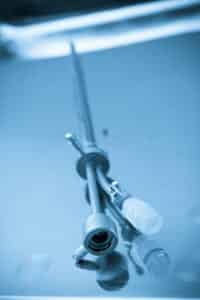 The authors detail the history of urethral dilation beginning in a time when very little was known about normal voiding. Dilation of the urethra emerged as a treatment for numerous problems including urinary tract infections and bladder pain. The assumption was that these issues resulted from a urine tube that was too narrow to permit proper emptying of the bladder. However, it is now known that spontaneous narrowing of the urethra (urethral stenosis) is uncommon and probably represents only 1-2% of patients with voiding dysfunction. This is much less common than the frequency of urethral dilation would suggest. One concern is that repeated urethral dilation can even be the cause of narrowing of the urethra due to fibrotic healing.